Do you want winter sunshine on your driveway or cool shade in July? In Evergreen, two homes a half mile apart can live very differently because of sun, slope, and trees. If you are buying in the foothills, understanding these microclimates helps you choose a property that fits your daily routine, energy goals, and maintenance comfort. In this guide, you will learn what to look for, how sun and snow behave on different lots, and the trade-offs to expect. Let’s dive in.
Why Evergreen lives differently
Evergreen sits around 7,000 to 7,500 feet in the Front Range foothills. Small changes in elevation, tree cover, and slope orientation create noticeable differences in temperature, snowpack, wind, and melt patterns from one block to the next. According to NOAA climate normals, temperatures generally drop about 3.6 degrees Fahrenheit per 1,000 feet of elevation, so a few hundred feet can matter on winter mornings. High elevation also brings strong sun, which is your best friend for melting snow.
Winter storms and upslope patterns can deliver more snow to the foothills than to the plains. Totals and how long snow sticks around vary by elevation and aspect. You can explore regional snowpack trends through the USDA’s NRCS snow and climate monitoring resources that track Rocky Mountain basins.
How lot orientation shapes daily life
Aspect means which way your lot and main living areas face. In Evergreen, aspect drives the rhythm of snow melt, indoor light, and energy use.
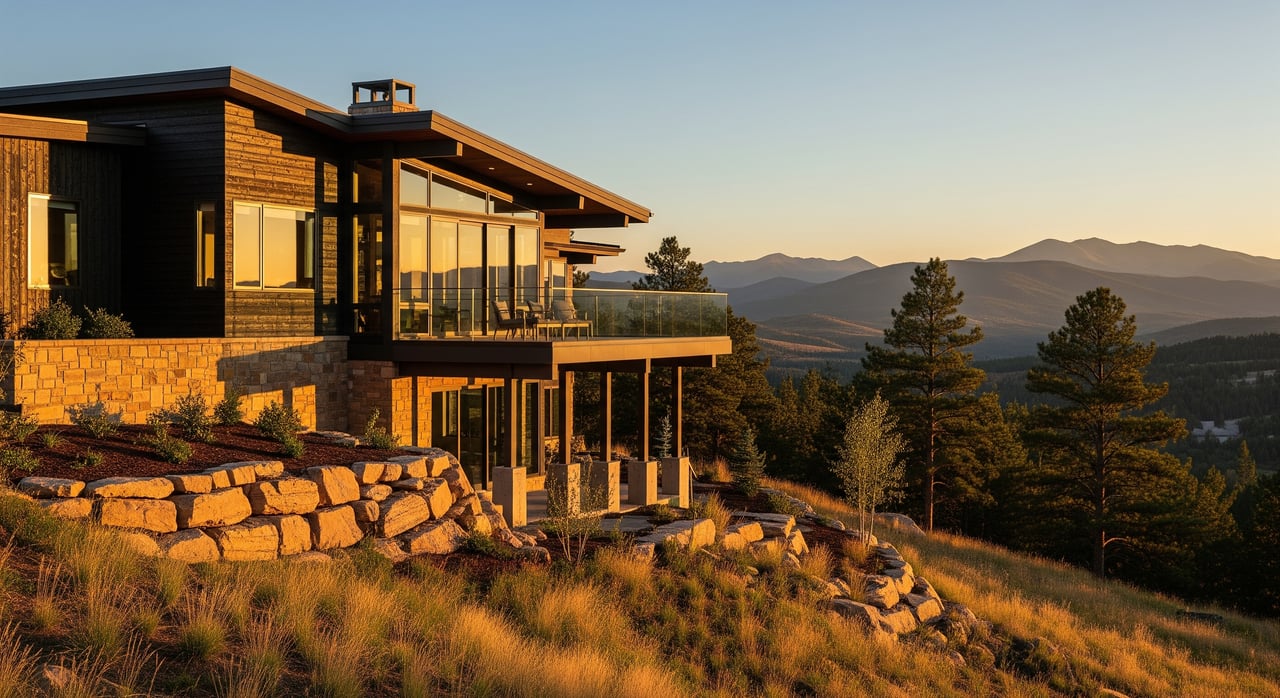
South-facing advantages
- Faster snow and ice melt on roofs and driveways in winter.
- Brighter interiors during short winter days.
- Strong potential for passive solar heat in colder months.
Trade-offs: west-southwest windows can bring warm summer afternoons. Shade structures, deciduous trees, and properly sized overhangs help manage that heat.
North-facing realities
- Less direct winter sun, so snow persists longer on the ground and shaded roofs.
- Walkways and driveways may hold icy patches into spring.
- Cooler interiors in summer, which can lower cooling needs.
Expect higher winter heating demand if passive solar gain is limited. Plan for steady snow and ice management.
East and west exposures
- East-facing entries warm up earlier, which helps clear overnight frost.
- West-facing rooms stay brighter later, but summer afternoons can feel hot without shading.
Slope, valleys, and wind exposure
Evergreen’s hillsides and drainages create small climate pockets that affect comfort and maintenance.
Steep slopes and drainage
- Steep south slopes intensify sun and melt snow quickly.
- Steep north slopes hold snow and shade, with more persistent ice.
- Lower downslope lots can see concentrated runoff during rapid melt. Check grading, swales, and drainage paths.
Ridges vs hollows
- Ridges and exposed knolls dry faster and avoid cold-air pooling, but they can be windier and see wind-driven snow.
- Hollows and canyon bottoms collect cold air overnight. Expect frost pockets and slower spring drying.
Trees, shade, and wildfire balance
Evergreen lives up to its name. Pine and spruce offer privacy and summer cool, but they also shape winter maintenance.
Canopy, ice, and maintenance
- Dense evergreen canopy shades driveways and roofs all winter, which prolongs snow and ice. Needles can clog gutters, which raises ice dam risk if gutters are not maintained.
- Deciduous trees allow winter sun but provide valuable summer shade.
- Plan on seasonal gutter cleaning, roof checks, and mindful snow storage where drip lines refreeze.
Defensible space and insurance
These foothills are part of the Wildland Urban Interface. Thoughtful thinning and defensible space reduce risk and can change how sun reaches your lot. The Colorado State Forest Service outlines best practices in its Defensible Space guidance. Insurance availability and premiums can reflect wildfire exposure, so ask for mitigation records and review options early.
Energy, sun, and building performance
Heating drives most energy use at Evergreen elevations. Smart design and maintenance help you stay comfortable and efficient.
Passive solar and envelope basics
South-facing windows can add useful winter heat if the home has a tight envelope and good insulation. The U.S. Department of Energy explains key principles in its passive solar home design guidance. Overhangs, window coverings, and exterior shading help manage summer gain on west and southwest exposures.
Freeze and thaw cycles increase moisture risks. Make sure grading moves water away from foundations, downspouts extend far from the house, and crawlspaces are dry. Address air sealing and insulation first to reduce heat loss and limit ice dam formation on the roof.
Rooftop solar potential
Evergreen’s high solar radiation can be an advantage if your roof and site are not shaded by trees or ridgelines. Southern exposures usually yield the best production. Before investing, run a site-specific shading and production estimate using NREL’s PVWatts. Trimming or selective tree removal may be needed for performance.
Understanding local heating demand
Heating degree days are higher in the foothills than on the plains, which means more heating hours. For neighborhood-level context, the PRISM Climate Group provides high-resolution maps of temperature normals and precipitation at PRISM Climate Group. When comparing listings, request utility histories and consider elevation and orientation differences.
Winter access and showing logistics
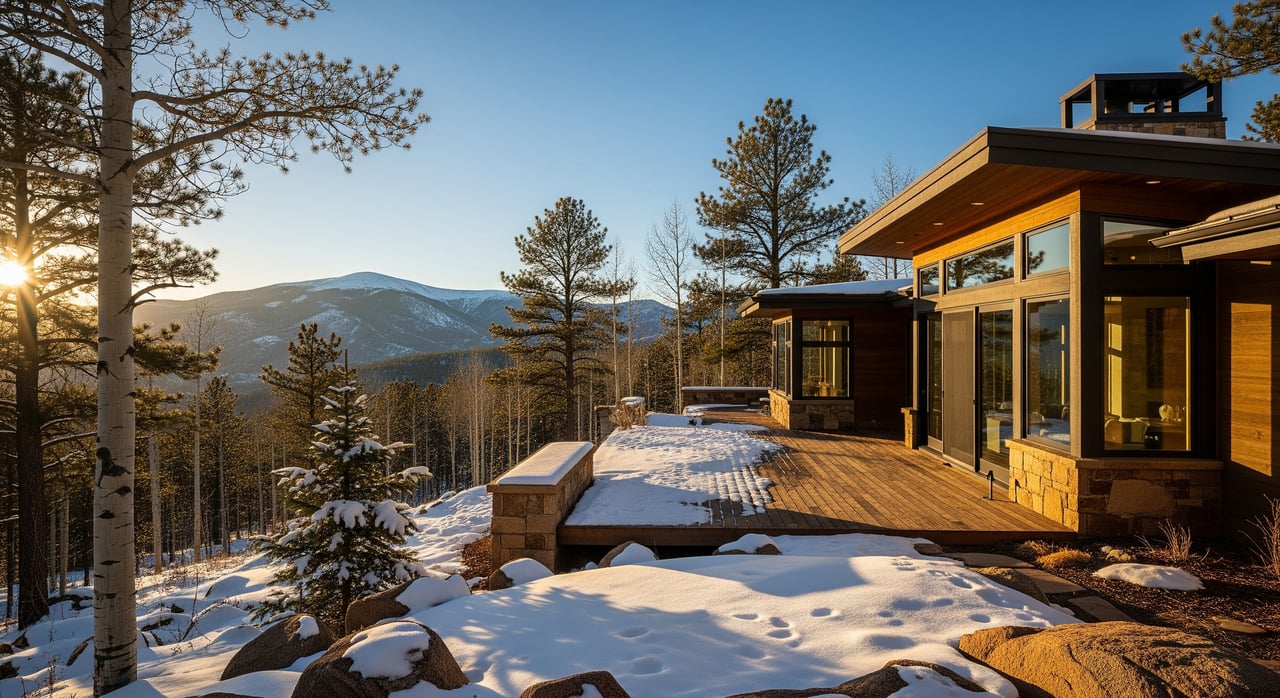
Snow totals can vary across Evergreen on the same day. Melt and refreeze cycles are common, so plan for both traction and drainage.
Driveways and road maintenance
- Steep, shaded, or north-facing driveways can stay slick. Heated mats, embedded heat cables, or regular plowing may be worthwhile.
- Confirm if your road is county maintained or private. Plowing on private roads and driveways is the owner or HOA’s responsibility and can affect costs and access.
- Evaluate driveway grade, turning room for a plow truck, and safe areas to pile snow that will not block sightlines or drainage.
Safer winter showings
- Aim for late morning through early afternoon when sun is strongest.
- Clear and sand primary walkways, steps, and any shaded approaches.
- Note sun in living spaces. South-facing rooms often photograph well midday; north-facing rooms may need staged lighting.
Evergreen microclimate buyer checklist
Bring this list to every showing:
- Microclimate and orientation
- Which way do the main windows, roof planes, and driveway face?
- Where does winter sun reach on the lot, and when?
- Snow and access
- County road, private road, or HOA road? Who handles plowing and at what trigger depth?
- Driveway steepness, traction history, and space to store snow.
- Any shaded steps or north-facing walks that ice over?
- Roof and envelope
- Roof age, material, and pitch; any history of ice dams?
- Attic insulation and air sealing status.
- Gutter size, guards, and cleaning schedule.
- Trees and shade
- Evergreen vs deciduous mix and proximity to structures or power lines.
- Tree work completed for defensible space; permits or HOA rules for trimming.
- Drainage and foundation
- Positive grading away from the home and extended downspouts.
- Any signs of basement or crawlspace dampness after melt events?
- Utilities and heat
- Primary fuel type and age of furnace, boiler, or heat pump.
- Any supplemental wood or pellet stove and maintenance records.
- Safety and insurance
- Fire mitigation completed and documented.
- Any known insurance constraints for the address.
Typical trade-offs to consider
- South-facing lots
- Pros: faster melt, brighter winter interiors, strong solar potential.
- Cons: warmer summer afternoons without shading; landscaping may dry faster.
- North-facing lots
- Pros: cooler summers and shade for outdoor living.
- Cons: longer-lasting snow and ice, higher winter heating demand.
- Heavily wooded lots
- Pros: privacy and summer comfort.
- Cons: more gutter and roof maintenance, snow interception drip zones, wildfire mitigation needs.
- Steep slopes and long drives
- Pros: views and quick drying when sunny.
- Cons: traction challenges, higher snow-removal costs, careful drainage planning.
Make a confident move
Selecting the right Evergreen property is about matching sun, snow, and slope to how you live. With careful attention to orientation, tree cover, access, and energy performance, you can enjoy bright winter days, smooth driveways, and efficient comfort year-round. If you want help reading a lot’s microclimate and weighing options, connect with a local team that studies these details on every showing. Reach out to Emily Henderson for a private, no-pressure conversation about your foothills plans.
FAQs
What is an Evergreen microclimate and why does it matter?
- A microclimate is a small-scale climate pattern shaped by elevation, aspect, slope, and trees. In Evergreen, it affects snow persistence, indoor light, energy use, and winter access.
How much colder can a higher Evergreen neighborhood feel than a lower one?
- Temperature often drops about 3.6 degrees Fahrenheit per 1,000 feet of elevation, so a few hundred feet of gain can feel noticeably cooler in winter, especially in the morning.
Are south-facing driveways maintenance free in winter?
- No. They usually melt faster after storms, but steepness, shade, and storm size matter. Plan on plowing or de-icing during bigger events, with quicker clearing afterward.
Is rooftop solar effective in Evergreen’s tree cover?
- It can be. High-elevation sun helps, but trees and ridgelines can shade panels. Use NREL’s PVWatts for a site-specific estimate and consider selective trimming if appropriate.
How do I confirm if a road is county maintained or private before I buy?
- Ask for documentation in disclosures, check HOA rules if applicable, and contact county public works for maintenance status. Plowing responsibility affects access and annual costs.
How do trees influence wildfire risk and insurance in Evergreen?
- Dense evergreen canopy increases fuel loads. Defensible space and mitigation reduce risk and may help with insurance options. Follow Colorado State Forest Service guidance.